Fencing Portarlington | Coastal Colorbond, Timber & Pool — Drysdale Fencing

Fencing Portarlington — Built for the Bay

Coastal-grade Colorbond, marine-fixing timber and frameless pool fencing across Portarlington, Indented Head and St Leonards.

Portarlington fencing is a different job from the same job inland. The Port Phillip Bay frontage runs continuously from the harbour to the Indented Head boundary, and almost every Portarlington property sits within five kilometres of salt water. That single fact rewrites the materials list, the fastener spec, the post protection, and the maintenance schedule for every fence we build here.

We’ve been working the north-Bellarine coast out of our Drysdale yard for years. The lessons that keep recurring on Portarlington jobs — the ones that surprise newcomers and frustrate owners replacing fences earlier than they should have — all come back to the same root: salt air and onshore wind don’t care what the standard advice says. Build for the conditions or rebuild in eight years.

The Coastal Reality of Portarlington Fencing

Salt air drives every decision on a Portarlington fence. It accelerates fastener corrosion, breaks down inadequate protective coatings, and makes the difference between an 8-year fence and a 25-year fence the choice of a single component most owners never see.

The fastener question is the most important one. Standard galvanised screws and nails — the ones that come in the box from a builders’ merchant — will rust through within five to seven years on a Portarlington block. We use 316-grade stainless or hot-dip galvanised marine-rated fasteners on every job here, regardless of material. The cost difference at the materials level is small. The cost of pulling apart a fence to replace failing fasteners is not.

For the deeper coastal context, our Bellarine coastal timber guide covers what salt actually does to timber, treated pine treatment classes, and the maintenance cycle a coastal block needs. The same principles apply across Portarlington and the north-coast strip.

Material Strategy by Property Position

Foreshore-facing properties (Bayside Drive, The Esplanade, Pier Street)

Direct salt-spray exposure. We do not build hardwood paling fences on direct foreshore positions — the maintenance load is too high and the lifespan too short. The two materials that work here are:

  • Colorbond Ultra — the marine-grade specification with thicker zinc-aluminium coating. Standard Colorbond Steel will pit on a foreshore boundary within ten years; Ultra is rated for direct coastal exposure and is what we quote as default within 1km of the waterline.
  • Aluminium tubular and slat — for owners who want a more architectural look. Powder-coated aluminium with marine-grade undercoat handles salt better than steel and won’t rust through if the coating is breached.

Inland Portarlington (Newcombe Street back to the highway)

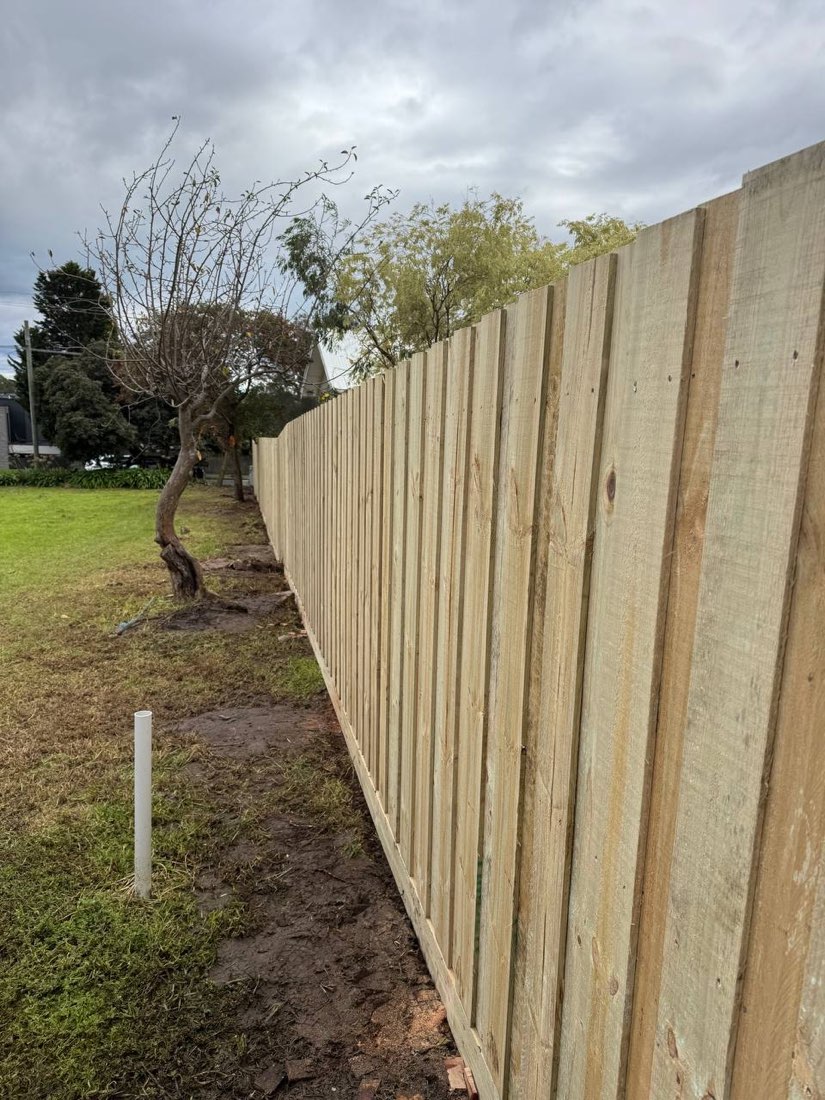
Salt influence is present but reduced. Standard Colorbond performs adequately here with proper post protection and marine-grade fasteners. Hardwood paling becomes a viable option provided the timber spec is honest — kiln-dried merbau or spotted gum, not generic “hardwood” that turns out to be plantation-grown softer species. Treated pine in H4 is acceptable for short-life fencing but not what we recommend for a permanent installation.

Our Colorbond vs hardwood comparison goes deeper on the trade-offs.

Period weatherboard cottages (the older Portarlington streets)

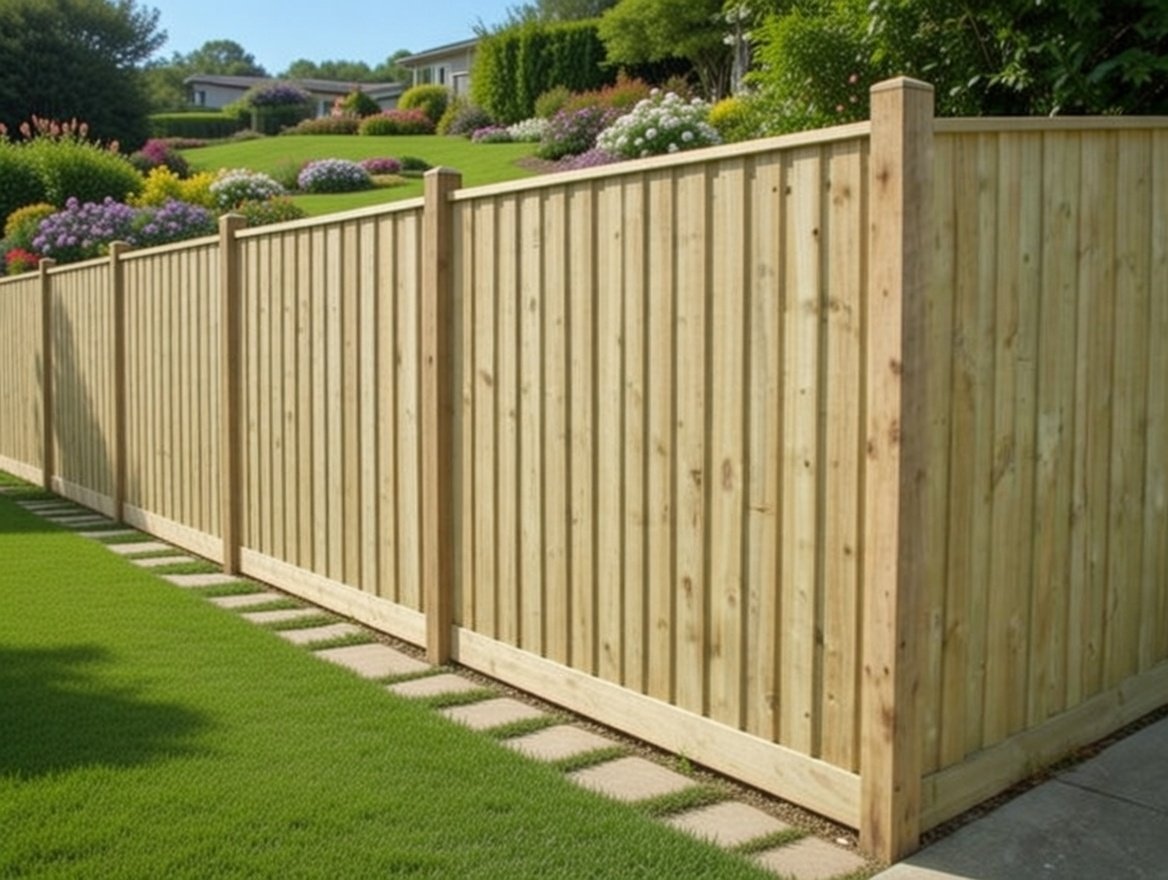
Many of the original Portarlington cottages near the harbour have streetscape constraints that make modern fencing materials look wrong. For these properties we work in painted timber paling with capped posts, often picket front fences with formal hardwood gates. The maintenance load is real — repaint every 4–6 years on the seaward side — but the period look justifies it for owners who care about it.

Wind Loading on the North Bellarine Coast

Portarlington faces north-northwest across the bay, and the prevailing summer northerly tracks straight onto the foreshore. Winter southerlies wrap around the headland and hit boundary fences from an angle that standard installations don’t account for.

Our coastal default is 65×65mm posts at 2.0m centres rather than the inland standard of 2.4m. Footings go to 750mm with wet-mix concrete sloped to shed water. Capping is full-length aluminium rather than discrete caps that lift in a 60-knot gust. These aren’t upgrades on a Portarlington job — they’re how we build here.

Pool Fencing in Portarlington

Pool installations cluster in the newer Portarlington estates and along the foreshore where bay views from a poolside lounge are the design driver. Frameless glass is the dominant request, and Portarlington pool fencing has one specific compliance issue we see again and again: the non-climbable zone calculation around bay-view glass panels.

The pool fence regulation is a 900mm clear zone outside the barrier — no climbable elements, including planters, garden art, and pool-side furniture. On a Portarlington block where the pool faces the bay, the temptation is to landscape right up to the glass. Don’t. The Form 23 inspector will fail it, and the certificate has to be in place before the pool can be filled.

Glass spec on a Portarlington install is 12mm toughened panels with 316-grade stainless spigots — never 304. The salt air will pit 304-grade spigots within five years and the panels will move on their fixings. Our pool compliance guide covers the rules in detail.

For Form 23 inspection and certification we work with Local Pool Inspections — they cover the Bellarine including Portarlington and turn certificates around same-day in most cases.

Holiday Lets and Short-Term Rentals

A meaningful percentage of Portarlington properties are managed as holiday lets through the summer. Fencing for a holiday-let property has different priorities than fencing for a primary residence: low maintenance is non-negotiable because the owner usually isn’t on site, security expectations from short-stay guests are higher than residential, and pet-friendly listings need fences that hold a dog as advertised.

We recommend Colorbond Ultra throughout for holiday lets, with full-height sheets on rear and side boundaries (no rail-and-paling), self-closing gate hardware on every gate, and pool fencing certified to Form 23 with a copy of the certificate kept in the property’s compliance folder. Insurance and platform listing requirements both check this — fencing is not an area to economise on a let property.

Maintenance Schedule for a Portarlington Fence

Even a properly built coastal fence needs cycle maintenance. We recommend:

  • Annually — wash down with fresh water at the end of summer to remove salt deposit. A garden hose is enough; no detergent.
  • Every 3 years — visual inspection of fastener heads, post bases, and capping. Look for white powder around screw heads (early-stage corrosion) and any movement at post bases.
  • Every 5–7 years — repaint any timber, touch up any Colorbond paint chips with the manufacturer’s matching paint, replace any failed fasteners.
  • Every 15 years — full structural review. Fences in foreshore positions usually need post replacement or rebuild on this cycle even when the visible fabric still looks acceptable.

Service Coverage Across the North Bellarine

From our Drysdale base we cover Portarlington, Indented Head, St Leonards and the rural-residential strip running back to the highway. We also service Curlewis and Leopold on the western side of the peninsula, and the broader Greater Geelong area through to the western suburbs.

Need coastal-grade fencing in Portarlington?

On-site quote with marine-spec recommendations within 48 hours.

Call 0485 577 980
Request a Quote

Portarlington Fencing — Frequently Asked

Do I really need Colorbond Ultra in Portarlington, or will standard Colorbond do?

Within 1km of the bay, Ultra is what we quote as default. Beyond 1km, standard Colorbond Steel is acceptable provided the post protection and fasteners are marine-grade. The difference at material cost is small; the difference at lifespan is significant.

Can I install a hardwood paling fence on a foreshore-facing block?

Technically yes; we don’t recommend it. The maintenance cycle is too aggressive on direct salt exposure and timber will need replacement within 12–15 years even with proper kiln-dried hardwood and marine fasteners. Colorbond Ultra or aluminium will outlast it on the same boundary.

What stainless grade do I need for pool fence spigots?

316-grade is non-negotiable on a Portarlington install. 304-grade will pit within five years and the panel fixings will loosen. The cost difference is small and the safety implications of failed spigots on a pool fence are not.

How often does a Portarlington fence need painting or treatment?

Painted timber on a foreshore boundary needs repainting every 4–6 years. Colorbond doesn’t need repainting but benefits from an annual fresh-water wash to remove salt deposit. Aluminium is essentially zero-maintenance beyond the wash-down.

Do you handle holiday-let compliance for fencing and pool barriers?

Yes. We build to certifiable standard, document the install for the property compliance folder, and coordinate Form 23 pool inspection through Local Pool Inspections so you have current paperwork on file before guests arrive.