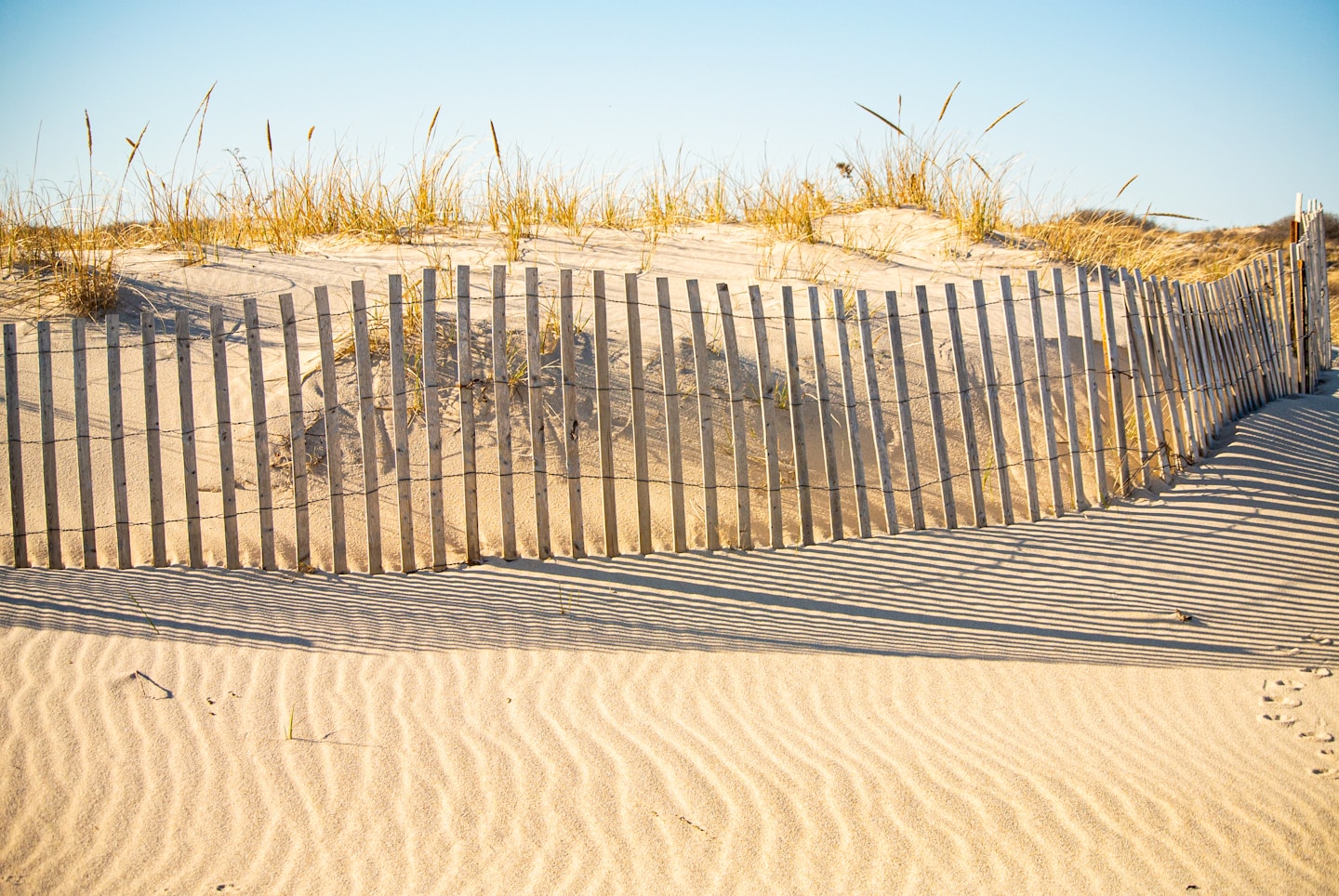
Timber on the Bellarine has three things working against it that most Victorian fences never meet together: salt air off Port Phillip Bay, strong sun with little shade on newer blocks, and soils that swing from free-draining sand near the water to reactive clay a few streets back. In Clifton Springs you can get all three within one suburb.
Most timber fences here are either hardwood paling in the older streets or treated pine in the newer estates. Both behave differently on the peninsula than general fencing guides suggest, and choosing the wrong one, or installing it the standard way, costs more to put right than most owners expect.
What salt air actually does to timber
Close to the coast, salt air becomes one of the main factors in how long a timber fence lasts. Salt speeds up corrosion of nails, bolts and nail plates, carries moisture into the surface of the wood and roughens it over time. None of this is obvious from the footpath.
The common rule of thumb for how long treated pine lasts is based on average conditions, not an exposed coastal block, so expect surface wear to show sooner here. Hardwood copes better, but on a coastal block it still needs attention that the same fence 20 kilometres inland wouldn’t.
Signs of salt-affected timber are worth knowing: fibres lifting on the surface even where the wood isn’t wet, rust staining spreading out from nails and plates, and a greying that looks patchier than ordinary sun fade.
Treated pine: what works and what doesn’t
Treated pine is the most common fencing timber in the newer Bellarine estates. It’s affordable and easy to get, and the treatment class matters more on the peninsula than in most of Victoria.
Posts in the ground need H4 at least. Rails and palings are above ground, where H3 is the standard minimum, though on an exposed coastal run it’s worth asking about stepping up. The difference in material cost between treatment classes is small next to the cost of replacing a fence early.
The cheapest pine on the rack isn’t usually the right choice for a coastal block. Treatment penetration varies between products, and on a sandy, exposed site that variation shows up quickly.
Hardwood: the realistic picture
The dense, high-heartwood hardwood in the old fences around the peninsula stood up to salt and sun better than any treated softwood. The trouble now is getting that quality consistently. Most hardwood palings sold today come from younger, faster-grown trees with less heartwood and more variable density.
It still generally outperforms treated pine on exposed coastal blocks, just not by as wide a margin as the fences older neighbours remember. If you want hardwood on a coastal property, ask your supplier for the species and its durability class under AS 5604 rather than taking whatever is labelled “hardwood”. Our timber fencing page lists the hardwood post and paling options we build with.
The installation details that matter here
Post footings matter more on the peninsula than on a sheltered inland block. Sandy soil grips a post less firmly, wind loads the fence harder, and drainage varies from one end of a block to the other. The bottom of the post is where coastal timber fences most often fail.
Slope the top of the concrete away from the post so water can’t pond at the base. In sand this matters even more: the ground drains fast, but water can still collect in the hollow of a badly finished footing.
Leave a clear gap between the bottom of the palings and the ground, and check it along the whole run, because ground levels vary and some sections will hold more moisture than others. A slightly bigger gap costs nothing and keeps the base from staying wet.
Maintenance for Bellarine timber fences
On an exposed coastal block, inspect the fence at least once a year and plan on renewing paint or stain more often than you would inland. On a sheltered block, behind a windbreak or on the landward side of the house, the cycle can stretch out.
The most important check isn’t the finish; it’s the fixings. Look for nail plates rusting through, coach bolts corroding where they pass through posts, and anything that has worked loose. A fence can look fine from the street and still be weak at its connections.
Buying a property in Clifton Springs or elsewhere on the Bellarine with an existing timber fence? Have someone look at the post footings and fixings before settlement. The surface of a timber fence tells you very little about its structure. And if the upkeep sounds like more than you want, a Colorbond fence takes most of it away. Our Colorbond vs hardwood comparison sets the two side by side.
Filed under: Local Area Guides
Get a Free Fencing Quote
Quality timber, Colorbond & repair work across Geelong and the Bellarine Peninsula.
0485 577 980