Fencing Leopold — Replacements, New Builds and Boundary Work
Colorbond, timber and pool fencing across Leopold’s established streets and the Gateway estates.
Leopold has the most varied fencing demand of any suburb on the Bellarine. The streets either side of Bellarine Highway range from 1980s brick veneer with original treated-pine boundaries on their last legs, through to brand-new Gateway estate blocks that need a first fence the day after handover. The same suburb where we replace a 35-year-old fence in the morning is where we install a never-fenced boundary in the afternoon. That mix shapes how we approach Leopold work.
We’re 12 minutes east of Leopold in Drysdale. That puts our crews on a Leopold site quickly enough that the same day’s quote often turns into the same week’s install for jobs that need a fast turnaround — typically the urgent ones: a fallen fence after a storm, a pre-settlement fix flagged by a building inspector, or a pool barrier that has to be in place before water goes in.
The Three Leopold Markets
Established streets — the replacement market
Most of central Leopold and the older streets running off Melaluka Road were fenced in the late 1980s and early 1990s with treated pine paling on round CCA-treated posts. That generation of fencing is at end-of-life now. The pine is grey, brittle, and often missing palings; the posts are loose at the ground line where the treatment has leached out, and the rails are sagging.
Replacement work in established Leopold streets is straightforward in principle but has a few specific issues:
- Established planting on the boundary. 30-year-old hedges and trees often grow against the existing fence and have to come back before we can work the line. We can usually trim what’s needed without killing the plant; if removal is needed we coordinate with the owner ahead of the fence work.
- Old service runs. Pre-2000s services (water, gas, telco) are sometimes laid shallower than modern standards and not always on the title. We Dial Before You Dig every Leopold replacement and dig the first metre of any post hole by hand.
- Neighbour conversations. Most established Leopold boundaries are dividing fences under the Fences Act, which means the cost-share notice process applies. Our boundary fencing guide covers the process and the common sticking points.
Gateway and the new estates — first-fence work
The growth corridor on the Bellarine Highway side of Leopold has added thousands of new blocks over the past decade. First-fence installations on these blocks share most of the issues we cover on our Curlewis page — disturbed estate ground, covenants to read, wind exposure on open boundaries — with a few Leopold-specific notes:
- Several Leopold estates have stricter colour palettes than Curlewis equivalents — Monument and Basalt only on some streets, with Surfmist permitted on others. Always check before ordering Colorbond.
- The Leopold estates have wider lot sizes on average, which means longer fence runs per block — typical first-fence quotes here are 50–80 lineal metres rather than the 30–40m typical further east.
- Pool installations are common as part of the new-build process, which means the pool fence and the boundary fence often need to be planned together to comply with the non-climbable zone rule.
Commercial corridor — light commercial and rural-residential
The eastern side of Leopold transitions from residential into rural-residential and light-commercial properties along the highway. Fencing here is a different specification: longer runs, often gated for vehicle access, sometimes black powder-coated tubular for security and visual signal. We handle this work on the same crew that runs residential — the principles are the same, the spec sheet is different.
Material Choice in Leopold: The Honest Trade-offs
Leopold sits far enough inland that coastal salt isn’t a primary factor — it’s not the issue it is in Portarlington. That widens the materials list:
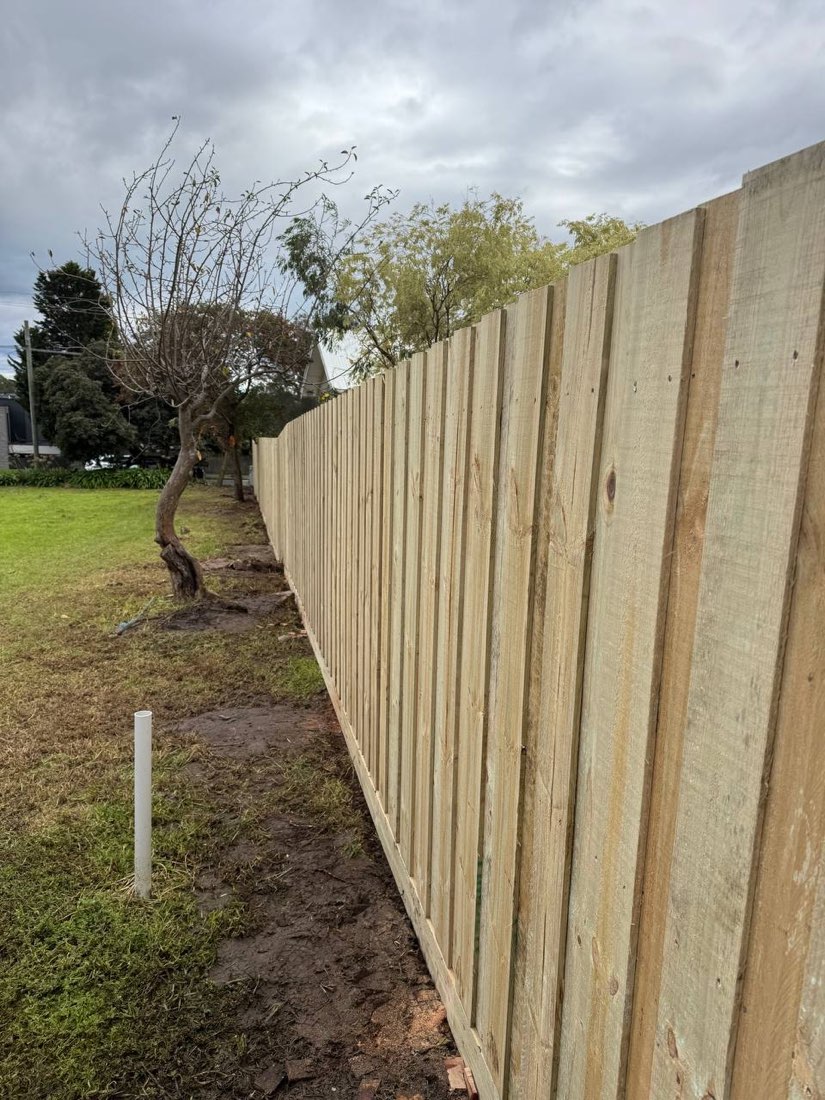
Treated pine paling — the cheapest option and what’s already failing on most Leopold replacements. We don’t recommend it for a permanent fence; the next replacement cycle hits in 18–22 years on a Leopold block and the cost saving up front is recovered by the earlier replacement. Detail in our timber fencing guide.
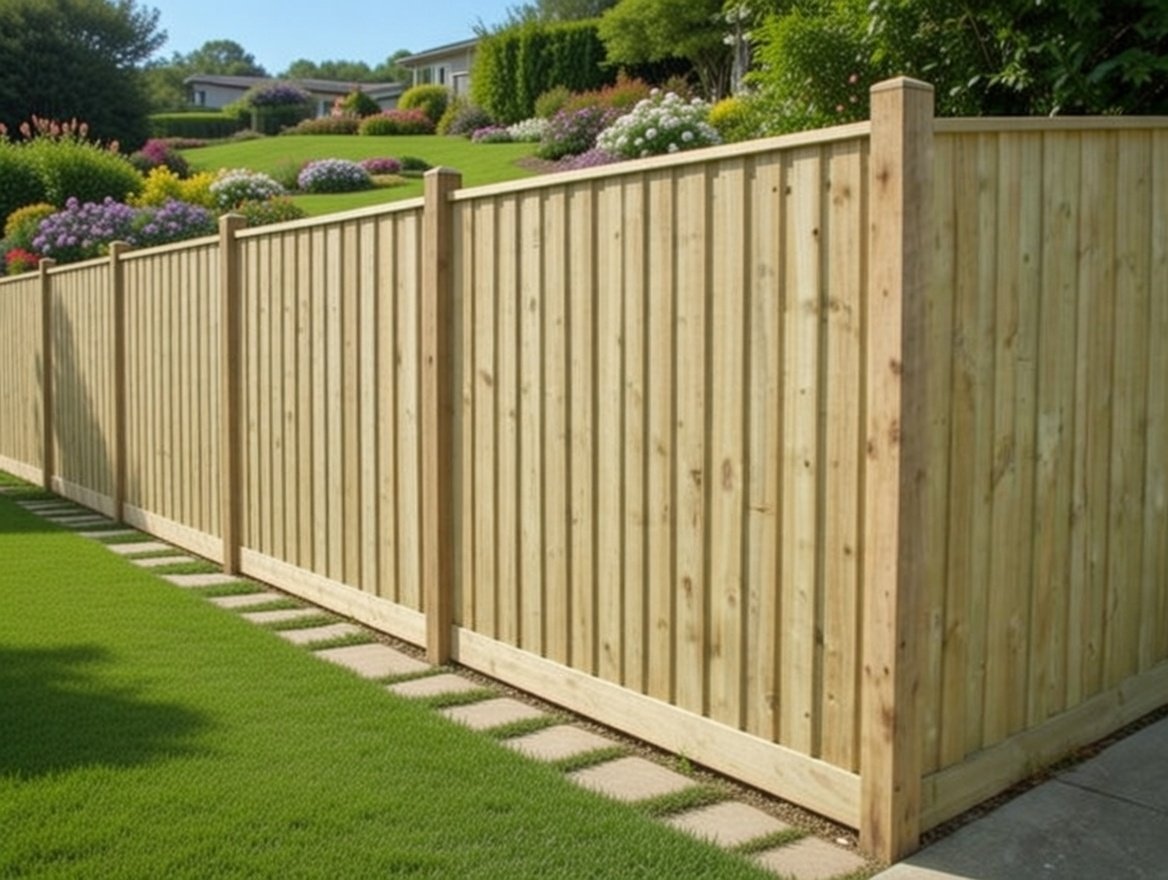
Hardwood paling — kiln-dried merbau or spotted gum lasts 30+ years on a Leopold block with minimal maintenance. The look is warmer than Colorbond and ages well. Front fences benefit most from this; rear boundaries where visibility is low can usually justify the cheaper option.
Colorbond — the dominant choice for new Leopold installations and the strongest replacement option for owners who don’t want to repaint. Standard Colorbond Steel is fine for Leopold positions; you don’t need the Ultra coastal grade we quote for Portarlington. Our Colorbond Geelong guide walks through the full spec; our colours guide covers what works against typical Leopold facades.
Aluminium tubular and slat — common on commercial and front-fence work, occasionally on rear boundaries where security is a higher priority than privacy. Powder-coated aluminium is essentially zero-maintenance over 25+ years.
Glass pool fencing — the standard choice for new Leopold pool installations. Frameless 12mm toughened panels, semi-frameless where budget is the driver. Our pool compliance guide covers the certification requirements.
Replacement Fences — What to Expect from the Process
If you’re replacing an existing Leopold boundary, the process from first call to final cap usually runs:
- Site visit and quote (week 1). We measure on site, photograph the existing fence, identify any boundary marker issues, and provide a written quote with material spec and timing.
- Fences Act notice (weeks 2–3). If the boundary is shared, we provide the notice template. Your neighbour has 30 days to respond. Most don’t object once the cost-share is clear.
- Removal (day 1 of install). Old fence comes out, all timber and metal removed from site the same day. We do not leave demolished fencing on the property.
- Post installation (day 2). Posts set in wet-mix concrete to 600–750mm depending on soil. Concrete cures for 24 hours minimum before sheets or palings go on.
- Fabric installation (days 3–4). Sheets, palings or slats installed; capping and gates fitted; site cleaned.
For a typical Leopold replacement project the calendar from first call to finished fence is 4–6 weeks; the on-site work itself is 3–4 days.
The Pre-Settlement Fence Repair
A specific Leopold call we get often: a building inspector flags fencing as a pre-settlement issue, and the vendor has 14 days to fix it before contract completion. We can mobilise quickly on these jobs because we’re local, and we provide the documented invoice and photographs the conveyancer needs to discharge the inspection condition.
Common pre-settlement flags: pool fence non-compliance (most frequent), structural fence damage, dividing fence in dispute with no Fences Act paperwork. The first two we fix; the third we can usually mediate to a written agreement that satisfies the conveyancer.
When to Replace a Leopold Fence — The Honest Signals
Before winter is the right time to assess an aging Leopold fence. The wet season puts load on already-failing posts and a fence that survived through summer can be down by August. Our winter fence problems guide walks through the signals worth checking — visible post movement, paling separation at the rails, fastener failure, and ground-line rot.
If you can rock the post by hand, the fence will not survive a serious wind event. Replace the post or replace the fence — but don’t ignore it.
Service Coverage Around Leopold
From our Drysdale base we cover all of Leopold including the Gateway estates, plus Curlewis to the east, Moolap and the eastern Geelong suburbs to the west, and the rural-residential blocks south of Bellarine Highway. For projects on the north coast we also service Portarlington.
Replacing or building new in Leopold?
On-site assessment and written quote within 48 hours.
Leopold Fencing — Frequently Asked
My 30-year-old treated pine fence is failing. Replace like-for-like or upgrade?
Honest answer: don’t replace like-for-like. Treated pine has improved since the 1990s but a Colorbond or hardwood replacement will outlast a new pine fence by 10–15 years. The labour to install is similar; the material cost difference is recoverable through the longer life.
Do I need a permit for a 1.8m Colorbond fence in Leopold?
Standard residential boundary fencing up to 2m doesn’t need a planning permit under the City of Greater Geelong scheme. Front fences over 1.5m open or 1.2m solid forward of the building line do. Pool fences need to comply with AS 1926.1-2012 and a current Form 23.
Can you fast-track a pre-settlement fence repair?
Yes. Pre-settlement work is a regular Leopold call for us. Bring the building inspector’s report; we’ll quote within 24 hours and schedule the work to meet your settlement date.
My neighbour is unresponsive to a Fences Act notice — what’s next?
If the 30-day response window passes with no reply you can proceed with the work and recover the cost-share through VCAT. Most cases don’t get there — a follow-up phone call after the written notice usually resolves the silence.
How long does a Leopold pool fence install take?
Frameless glass pool fencing on a typical residential install is 1–2 days on site once panels are on order. Panel lead time from supplier is 3–4 weeks. Plan the install around the pool’s water-fill date, not the other way around.