TL;DR: On the Bellarine coast, salt air speeds up corrosion, blown sand wears a coating back to bare metal, and onshore wind loads a fence harder than any inland street does. Out here the material spec matters more than the number on the quote. This guide covers what lasts on the coast and what fails early.
Direct answer: On exposed Bellarine blocks at Ocean Grove, Barwon Heads, Portarlington and Queenscliff, the fences that last are COLORBOND® steel in the right grade for your exposure and well-built hardwood timber with stainless or hot-dip galvanised fixings. Aluminium slat screens also suit front fences near the water. Light-gauge galvanised steel and treated pine on a fully exposed block are the ones that fail early. Match the material to your distance from the water and ask for 316 stainless fixings.
What makes the Bellarine coast so hard on fencing?
Live a few seasons out here and you stop needing the environment explained. Ocean Grove, Barwon Heads, Portarlington and Queenscliff sit on the exposed coast or a short hop inland, where onshore winds carry salt-laden air well past the foreshore and into streets that feel a long way from any beach.
Salt is the first thing working on a fence, and it does something to metal that inland air doesn’t. Salt is hygroscopic: it pulls moisture out of the air and holds it on the surface, and salt plus moisture speeds up corrosion. A post or fixing that would last for many years in inner Geelong can show rust within a few years on an exposed coastal block if the steel spec was wrong to begin with.
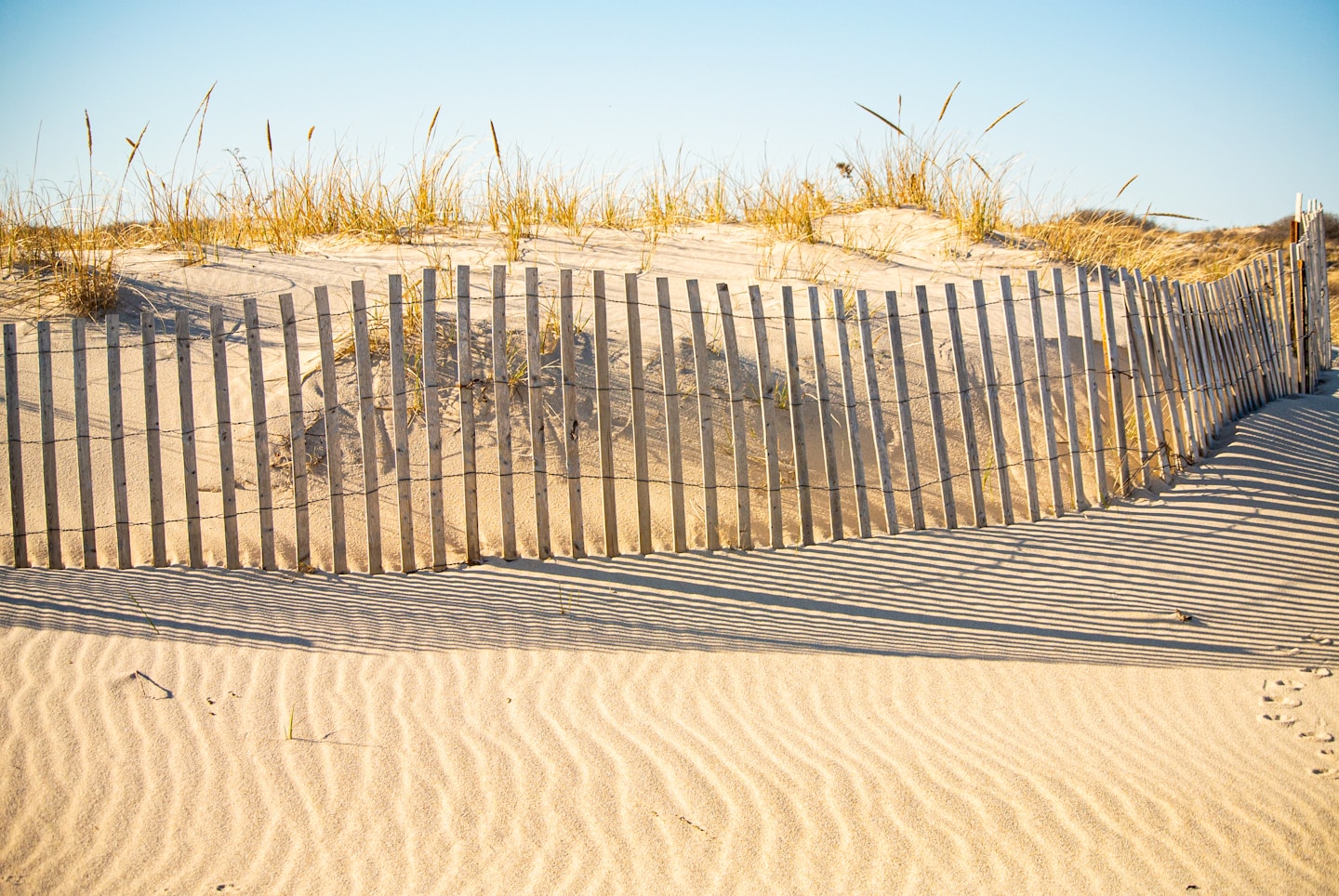
Then there’s the sand. On a genuinely exposed block, such as the front rows near the Ocean Grove beach or above the Barwon Heads dunes, blown sand scours coatings over a few seasons until bare metal shows through. After that, the salt has a way in.
And the wind doesn’t just push on the fence; it decides whether the fence stands. The Bellarine gets strong south-westerlies often enough that a fence designed for a sheltered inland street has to be rethought for a coastal one. Post depth, post size, spacing and panel design all matter, and getting any of them wrong can leave the fence flat in next door’s garden after a sustained blow.
Which fencing materials hold up on the Bellarine coast?
COLORBOND® steel: match the grade to your exposure
Standard COLORBOND® steel is used right across the Bellarine and does fine in typical coastal-suburban conditions, by which we mean blocks near the coast but not on the foreshore or copping the worst of the wind-blast.
For severe marine positions close to breaking surf, the product to ask for is COLORBOND® Ultra steel, which BlueScope makes with a heavier corrosion-resistant coating for that kind of exposure.
Matching the grade to the exposure is the whole game. Put standard COLORBOND® steel on a beachfront block and expect it to behave like a suburban Geelong job, and you’ll be disappointed inside a few years. A fencer who knows the coast asks about your distance from the water and how exposed you sit before they pick a product. Our Colorbond fencing page covers the panel and post options, and the Colorbond vs hardwood timber comparison weighs it against timber on the peninsula.
Hardwood timber
Hardwood is a legitimate coastal fencing material, but it needs active maintenance and a realistic expectation of lifespan.
Left uncoated, a dense, high-tannin hardwood carries some natural resistance to salt and moisture. Weathered to grey it suits the coastal palette; it’s the classic Bellarine holiday-home look. The one thing you can’t skimp on is where the post meets the ground: hardwood posts set in concrete or on post shoes, never sitting straight in damp soil. Even dense hardwood rots at the soil line if the water can’t drain away.
Treated pine is a weaker choice on a directly coastal block. The treatment protects against fungal decay, but it does nothing for salt-air corrosion of the metal hardware holding the fence together, and pine tends to move and warp more than hardwood in these conditions. We’ve gone into what the coast does to each timber in our Clifton Springs coastal timber guide.
If you want a timber fence on a coastal Bellarine property, hardwood with stainless fixings and a proper post system is the specification to ask for. Our timber fencing page sets out the species and post options we build with.
Aluminium slat screens
Aluminium doesn’t rust the way steel does. Its surface forms a thin, stable oxide layer that seals itself, so it copes with salt where unprotected steel doesn’t. That’s why aluminium slat fencing turns up on so many beachside Bellarine front fences and privacy screens.
Three things to get right:
- Powder coat quality. Aluminium slats are almost always powder-coated, and on the coast the coating spec earns its keep. Ask what the coating is and whether it’s rated for coastal or marine exposure; “powder-coated” on its own tells you nothing.
- Section thickness. Thin extrusions flex, and repeated flexing over time is fatigue. Ask for the wall thickness of the slats, posts and rails, and expect heavier sections where the wind loads them hardest.
- Fixings. 316-grade stainless is the coastal standard. Lower grades that are fine inland can rust-stain on the immediate coast, weeping down an otherwise good fence.
Aluminium slat screening reads light and contemporary, suits many newer Ocean Grove and Barwon Heads homes, and holds up on the coast rather than just looking the part for two summers. Our privacy fencing page covers slat screens alongside Colorbond and timber.
What to avoid
Light-gauge galvanised steel: galvanising protects against corrosion, but on the immediate coast the zinc coating is used up faster than it is inland. Light-gauge galvanised posts and rails are a false economy near the foreshore.
Basic powder-coated mild steel: the coating is only as good as its integrity. Once abrasion or impact breaks it, rust spreads under the paint quickly in salt air.
Untreated pine: not suited to coastal conditions, and it will degrade noticeably faster than hardwood here.
How does wind exposure change a coastal fence design?
A solid panel, whether Colorbond or close-boarded timber, is basically a sail. It presents a big flat face to the wind, and on an exposed block a south-westerly front loads that face hard.
The fix lives in the footings and the spacing. Posts go deeper, sometimes with a bigger footing, where the wind hits hardest. Rail fixings and post spacing have to carry the extra sideways load without working loose. And in the most exposed spots, a spaced-slat or hit-and-miss design that lets some wind through is often a smarter build than a solid panel: let the gusts pass and the structure has less to fight.
If wind exposure is real on your block, raise it with whoever’s quoting. A fencer who never asks how exposed you are hasn’t designed for it, and you’ll find out the first big blow.
Do you need a permit for a coastal fence?
Sometimes, and it depends on where you are and what you build. Ocean Grove, Barwon Heads and Portarlington are in the City of Greater Geelong, which requires a building permit for a side or rear fence over 2 m, a front fence over 1.5 m within 3 m of the street, a fence over 1 m within 9 m of intersecting streets on a corner, and a masonry fence over 1.2 m. Queenscliff and Point Lonsdale are in the Borough of Queenscliffe, so check with that council for its rules.
A planning permit is a separate question. Both councils have overlays, including heritage and coastal or environmental overlays, that can affect:
- the height of permitted front fencing
- materials allowed in specific areas
- whether a planning permit is needed at all
Heritage precincts and coastal overlays are where this bites. If your address has one, ring the council’s planning department with your fence height and material before you order anything; a five-minute call is cheaper than a fence you have to change.
FAQ
What is the best fencing for a property right on the Barwon Heads or Ocean Grove beachfront?
Right on the coast, close to breaking surf or in an exposed wind position, go for COLORBOND Ultra steel, or for a front fence or screen, aluminium slats with a coastal-rated powder coat and 316 stainless fixings. The material spec matters far more here than it does inland.
Does Colorbond rust near the ocean?
Standard COLORBOND steel performs well in typical coastal-suburban conditions but isn’t the product for a severe marine position. For blocks close to breaking surf, BlueScope makes COLORBOND Ultra steel with a heavier corrosion-resistant coating. Choosing the right grade for your distance from the water is the key decision.
Is aluminium or Colorbond better for a coastal fence?
Specified right, either one works. Aluminium slats won’t rust and suit the contemporary look of many new coastal homes, especially for front fences and screens. Colorbond gives you a solid panel and a severe-marine grade for the more exposed sites. The call usually comes down to the look you want and whether you need a solid screen for privacy and wind, where Colorbond has the edge.
How long will a timber fence last near the coast?
Hardwood with proper installation (concrete-set posts or post shoes, stainless fixings) can last many years on the Bellarine coast with basic maintenance, though a fully exposed foreshore position will shorten that. Natural weathering to grey suits the coastal look. Treated pine is a weaker choice for a directly coastal block.
Do I need a planning permit for a coastal fence in Ocean Grove or Barwon Heads?
It depends on your address and any overlays on it. Ocean Grove and Barwon Heads are in the City of Greater Geelong, and overlays such as heritage or coastal and environmental controls can trigger a planning permit. Separately, a building permit is needed for side or rear fences over 2 m and front fences over 1.5 m within 3 m of the street, so check with the council before you start.
Can you build fencing directly on a sand dune or beachfront block?
Yes, but it needs designing for, not just building. That means deeper post footings to grip in loose sand, materials specified for heavy salt exposure, and real thought given to wind loading. These sites ask more of a fence than a suburban block does. Get the spec right and it lasts; treat it like an ordinary job and it won’t.
Fencing built for the Bellarine coast
Drysdale Fencing builds Colorbond and timber fences on coastal properties from Portarlington round to Ocean Grove, Barwon Heads and Queenscliff. We know what the salt and the wind do here, match the materials to how exposed you sit, and build for conditions that find every shortcut sooner or later.
Call 0485 577 980 for a free site assessment and quote.
Filed under: Fencing Materials
Get a Free Fencing Quote
Quality timber, Colorbond & repair work across Geelong and the Bellarine Peninsula.
0485 577 980